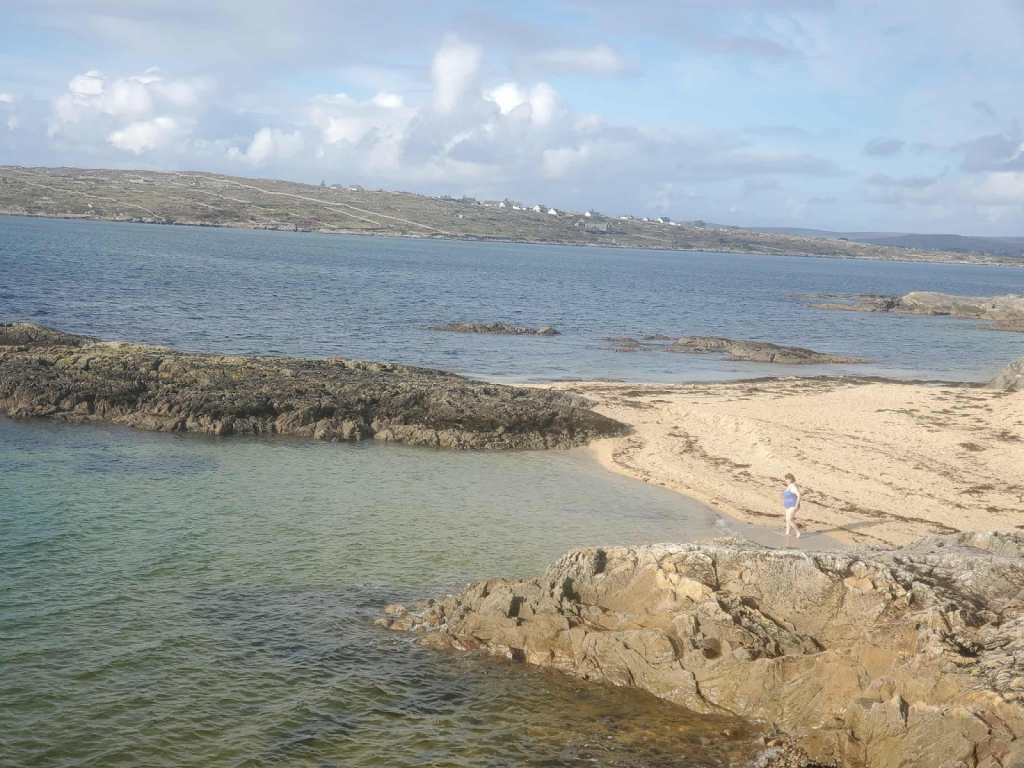
Early November, and we found Coral Beach, which was stunning. I met a lovely lady, who was in the sea swimming.
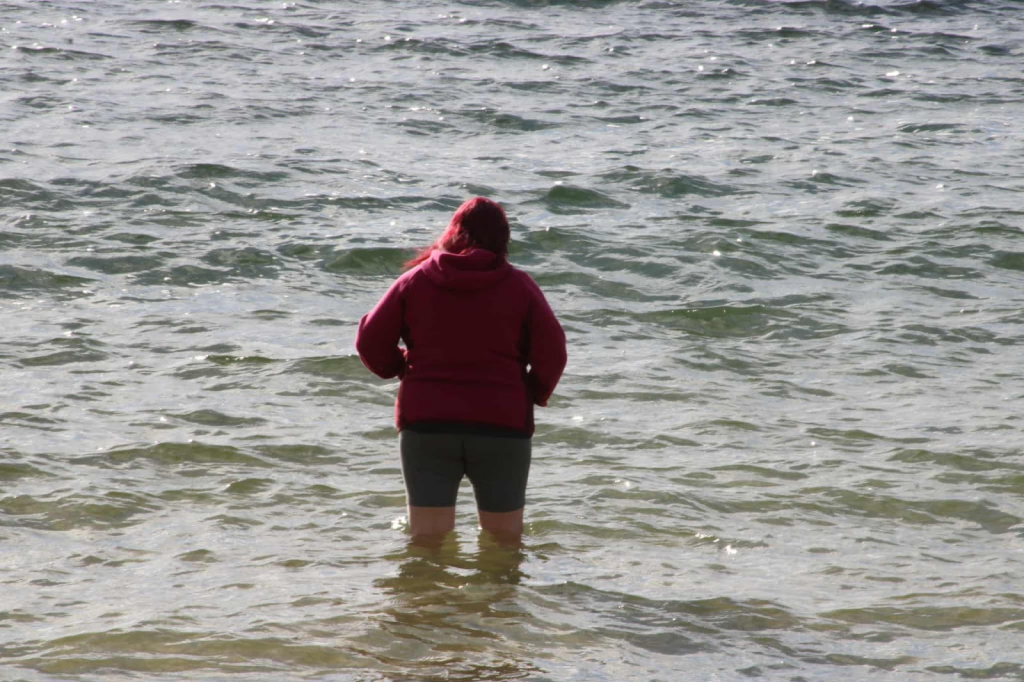
She told me she swims in the sea every day, unless she is away from home, and credits cold water sea swimming with her continuing health. She was older and fitter than me, so I decided to at least take my sore knee into the waves. It was lovely, and I was hooked. I now go in the water, and the colder the better, at every opportunity, and my knee is so much better.
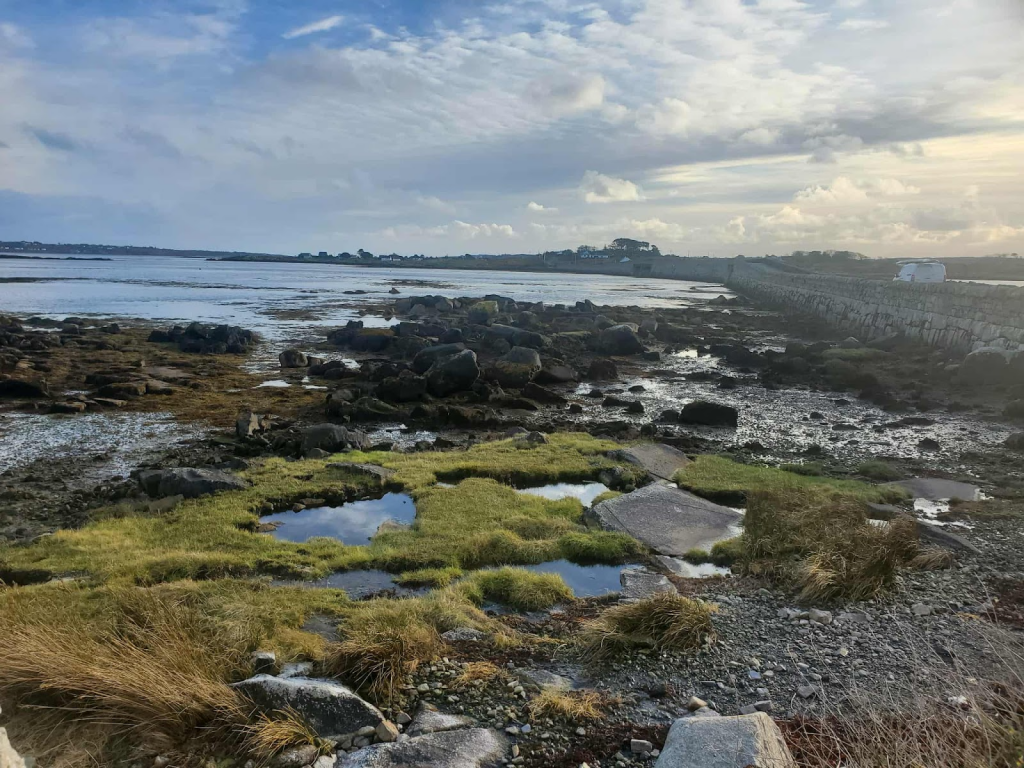
Golan Head was our next stop, with 2 bridges to cross before we got to the islands. We spent the night on a windy pier, feeling brave. Little did we know!
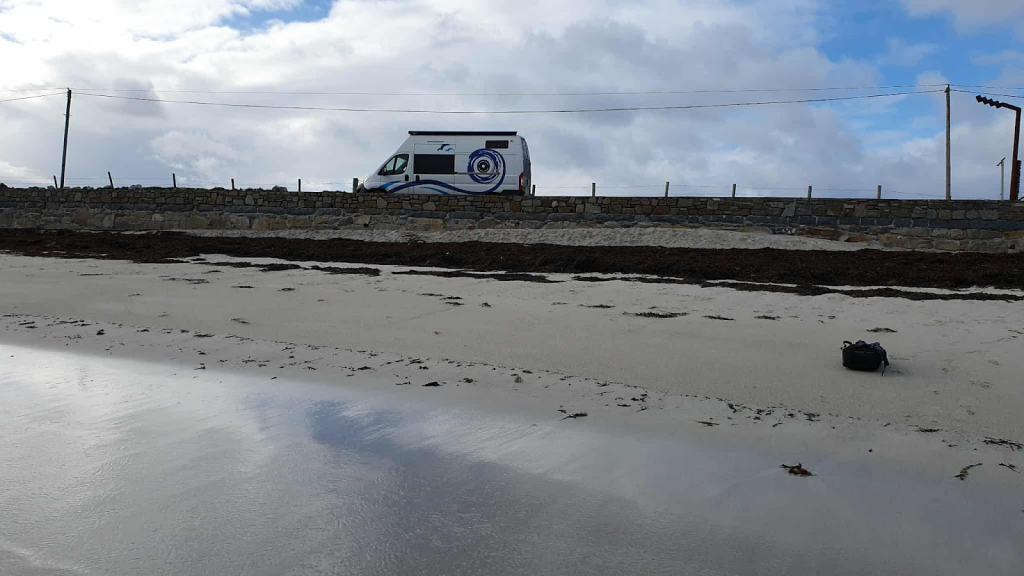
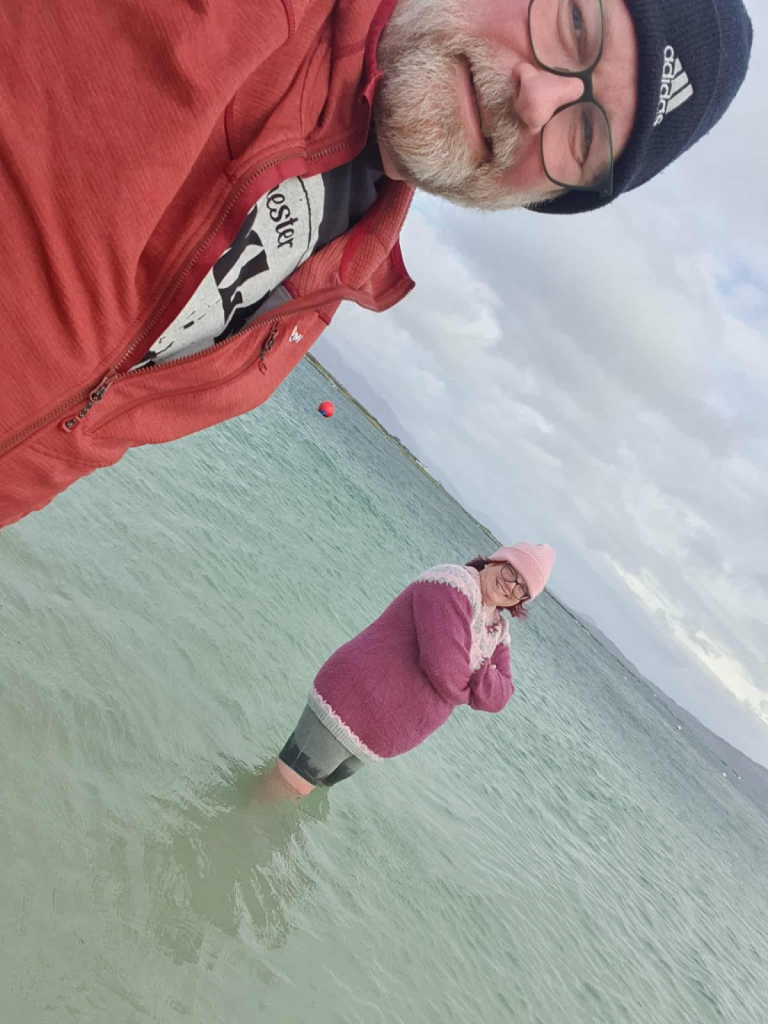
Another lovely beach, and I managed to get Neil in the sea, although we only went thigh deep, and kept our jumpers on.
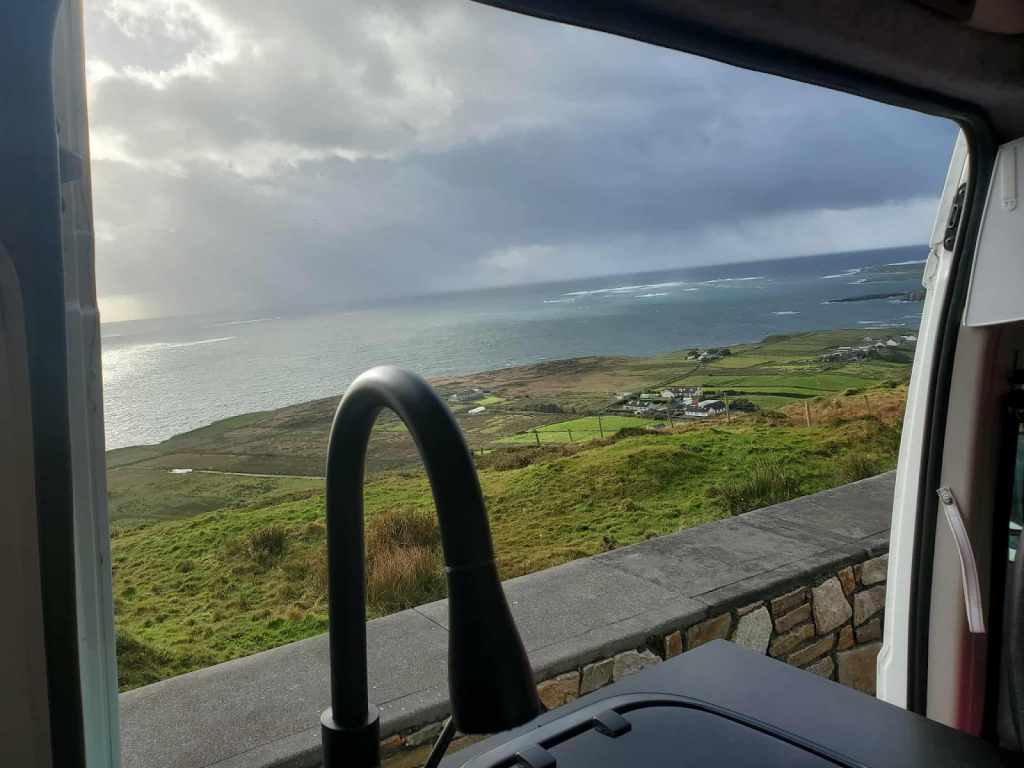
From here we found ourselves on Clifden’s Sky Road. It was windy, but sunny, and we were buffeted as we drove the high Sky Road, but the views were incredible. Lunch with a perfect view was becoming a regular treat.
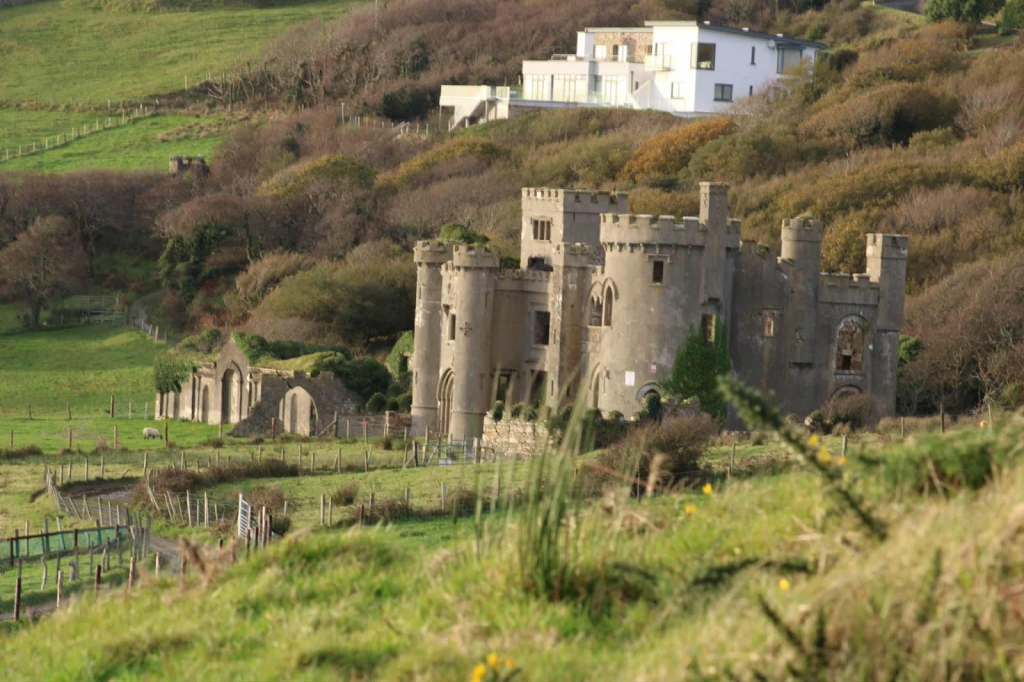
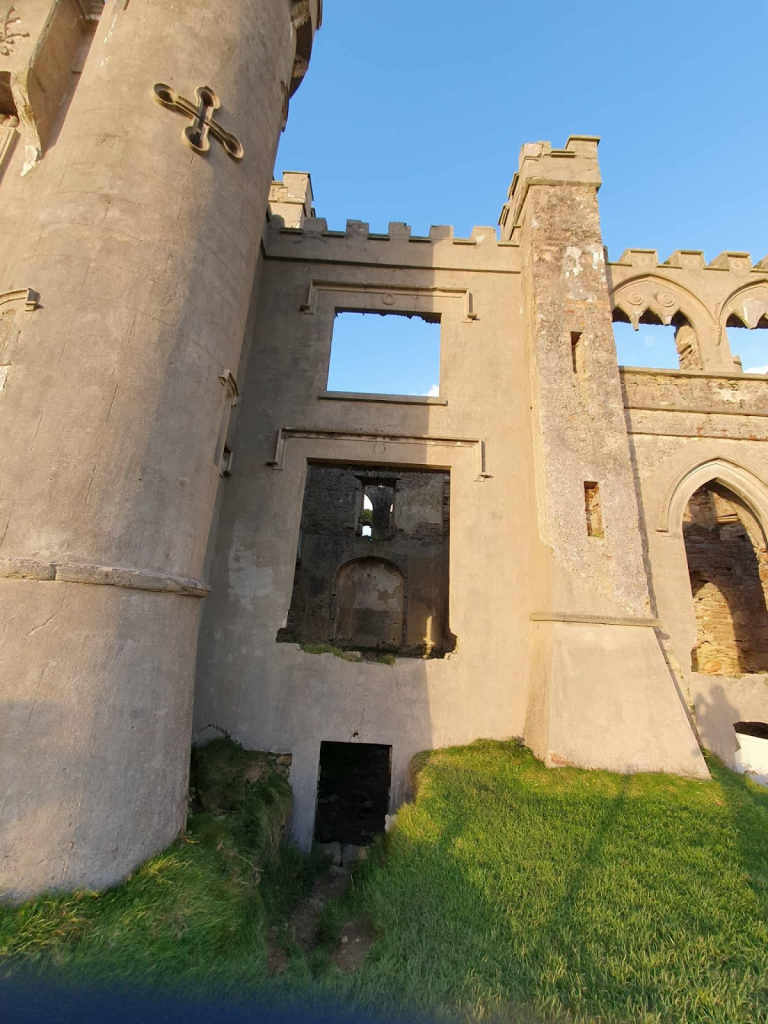
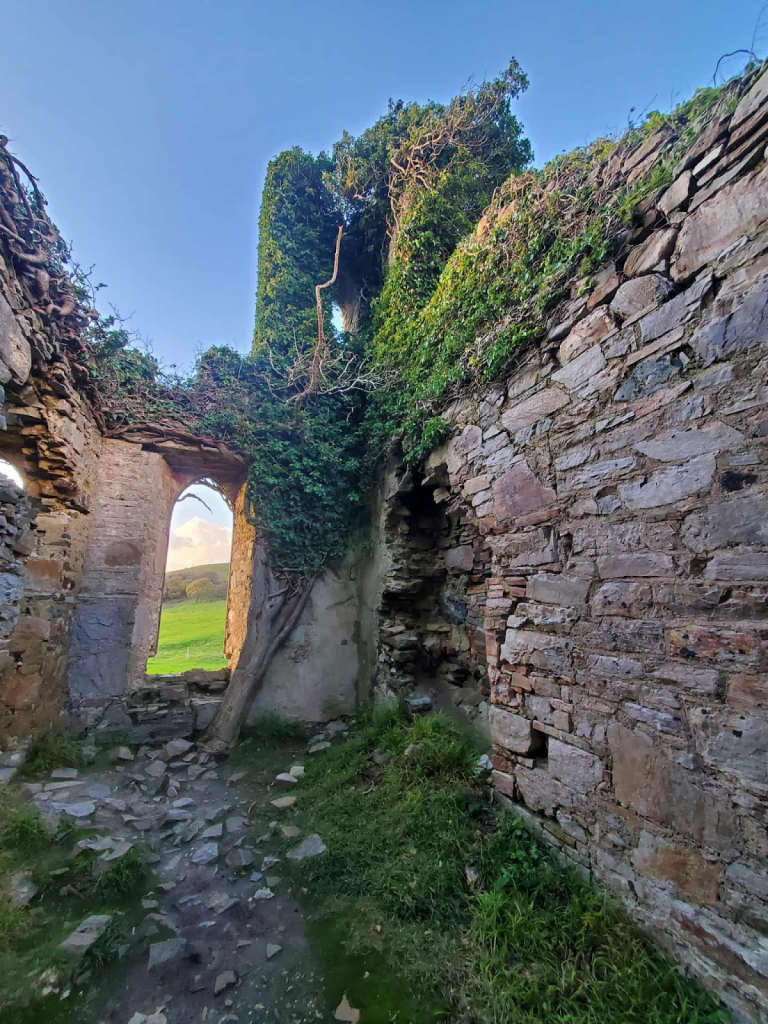
We also found Clifden Castle, thanks to a blog. The castle is a privately owned ruin. We had to park up on the road, and then walk down a farm track. There were signs saying “Danger: Keep Out” which we ignored, feeling like intrepid explorers. (I’m quite surprised Neil went, as he loves to obey a rule.) It was fascinating being able to walk round, in and even over parts of the castle, and to visit somewhere like that on our own.
Then I had the idea of parking on a pier off the lower Sky Road. Before embarking on our van life adventure, we had read about horror stories of noisy neighbours, disturbance by boy racers, flashing headlights(!) and attempted break-ins and we were prepared for these. We have CCTV on all 4 sides of the van, which we can view from our phones. If we are concerned, we can check what’s happening outside, without going outside. We also had the bulk head removed when designing the van, so we can get from the back into the front and drive away, without leaving the van. We don’t use any external antitheft devices and we don’t have external windows covered to shut out the light.
When our first bad night did arrive, it wasn’t any of these things. I spotted a lovely overnight park up on Park4night. It was at Eyrephort, a small concrete pier at the end of a narrow road. It was beautiful; just us with the sea and the sky and the promise of a swim from the small beach in the morning. We parked up, cooked our tea, and sat reading. Then the wind started. It blew all night, really strong gusts, which made the whole van rock alarmingly. And it rained, very hard with the sea being whipped into a frenzy. The van was moving so much we were actually concerned it may tip over. We didn’t feel safe moving on, as the approach road had been so narrow, winding, and had drops either side into the fields. It was a toss-up as to whether we drove along the dark, narrow road, on a very gusty night and risked coming off the road. Or we stayed on the pier and fretted about the van blowing over.
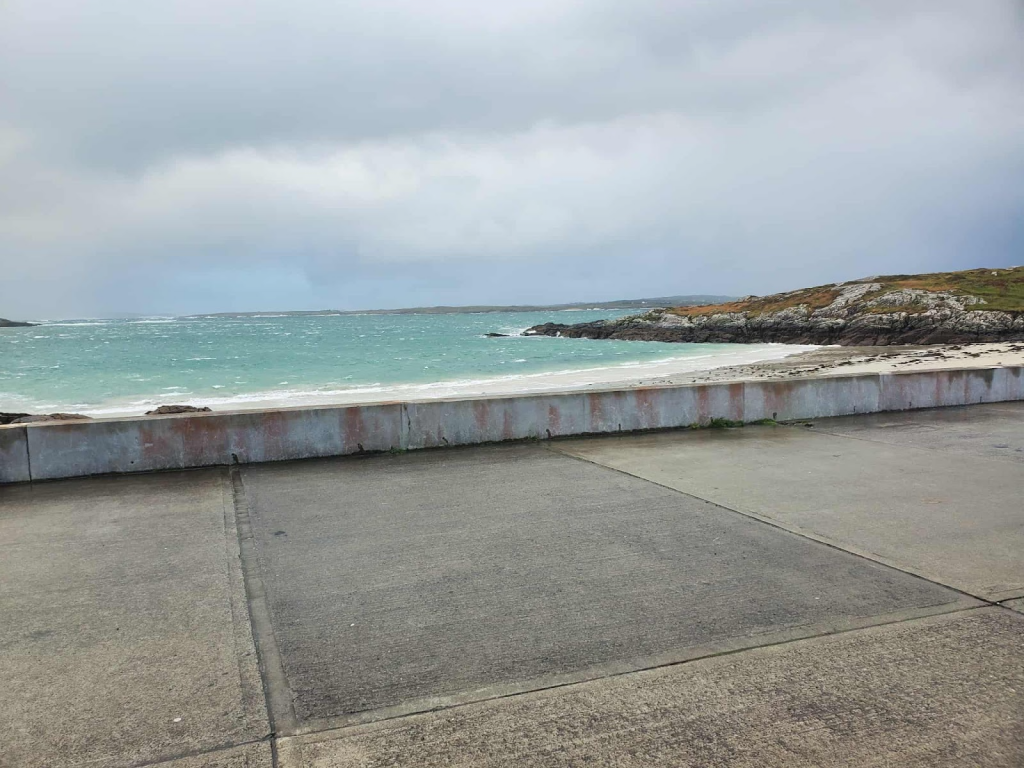
We stayed on the pier, but neither of us slept until the wind and rain died down in the morning. After a few hours’ sleep, we gave up on the idea of the beach and the swim and drove into Clifden. We found a place to park behind some shops, next to a fire escape. It was not beautiful, but it was quiet and sheltered and we went back to bed until lunchtime.
All the security and CCTV cameras in the world cannot overcome nature! Although we have now learnt that it is going to take a lot of wind to blow a 3.5 tonne van over and we sleep much better on stormy nights, just not on small stone piers.
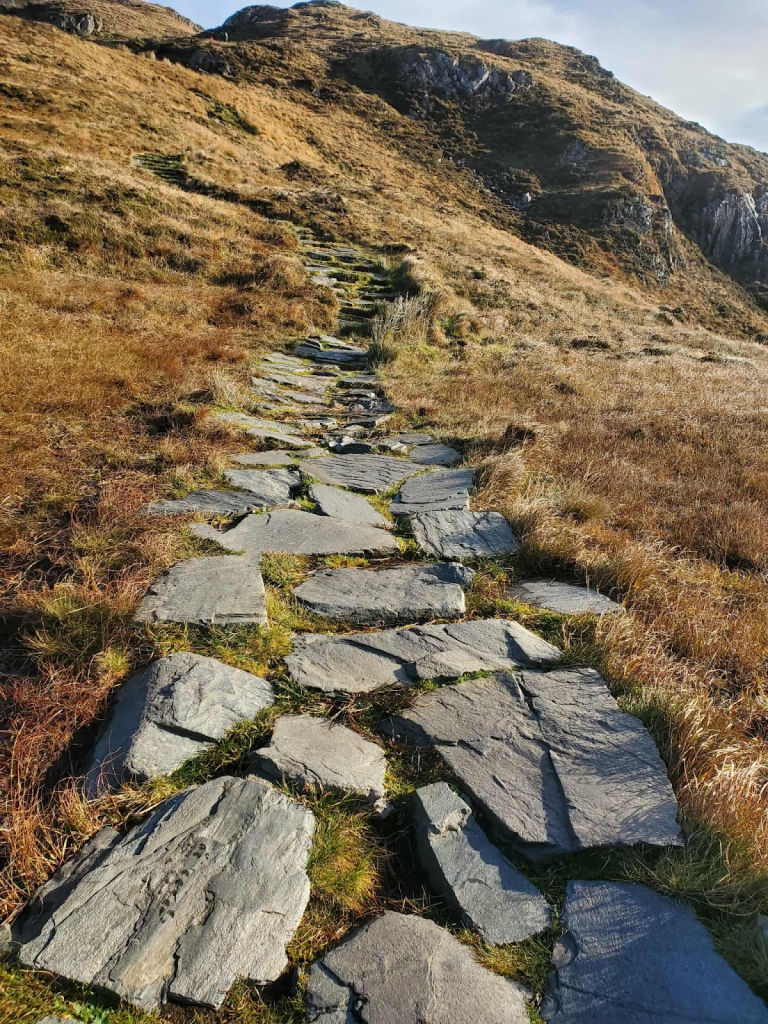
The walk up Diamond Hill in the Connemara National Park was lovely – and made an appearance in Sleeping Giants: A Puca Adventure (The Puca Adventures Book 1) eBook : Abbott, Emily : Amazon.co.uk: Kindle Store .
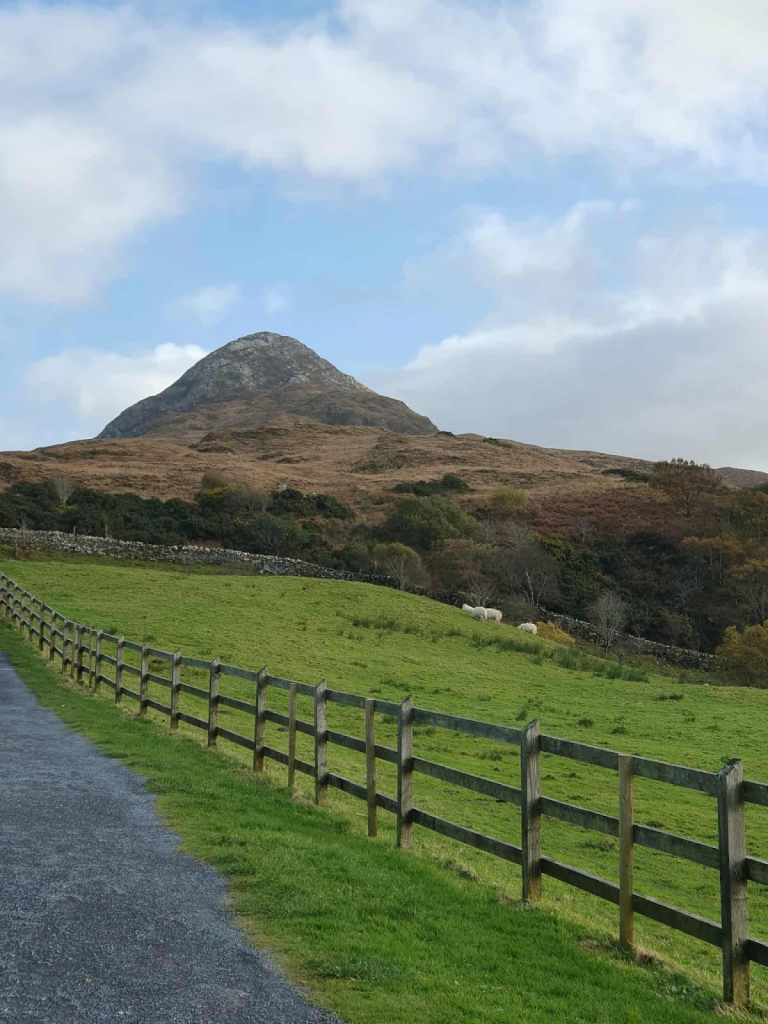
“We were all able to walk easily along the wide gravel paths, with wooden boardwalks across any boggy areas. This meant we made really good time, even though the higher we got, the narrower the path became, until it was more of a scramble than a walk for the children. I had to keep checking my speed, as my hooves were ideal for the terrain. The wind also got stronger as we got higher. As we got near the summit, I stopped. We were on the edge of mythic time, next to the way sign, and Askur needed to go on without us. I gave a short whistle and a buzzard landed on the grass in front of us.”
Then we found ourselves in the absolutely stunning drive through the Doolough Valley. The road followed the bank of the fjord and wound through the bottom of the valley. The hills on either side were steep and the dark clouds almost seemed to be sat on top of them and the fjord itself was dark and brooding.
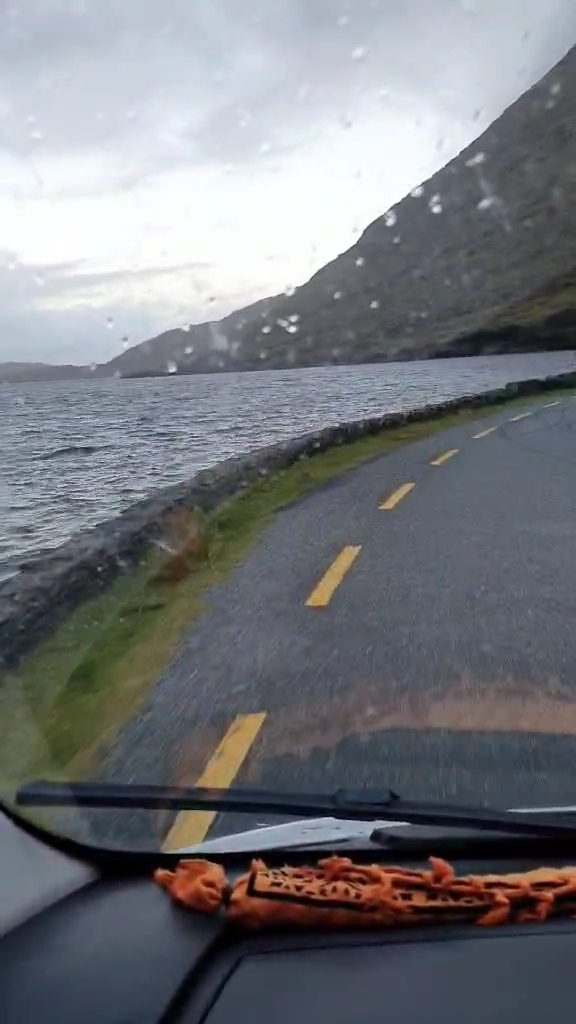
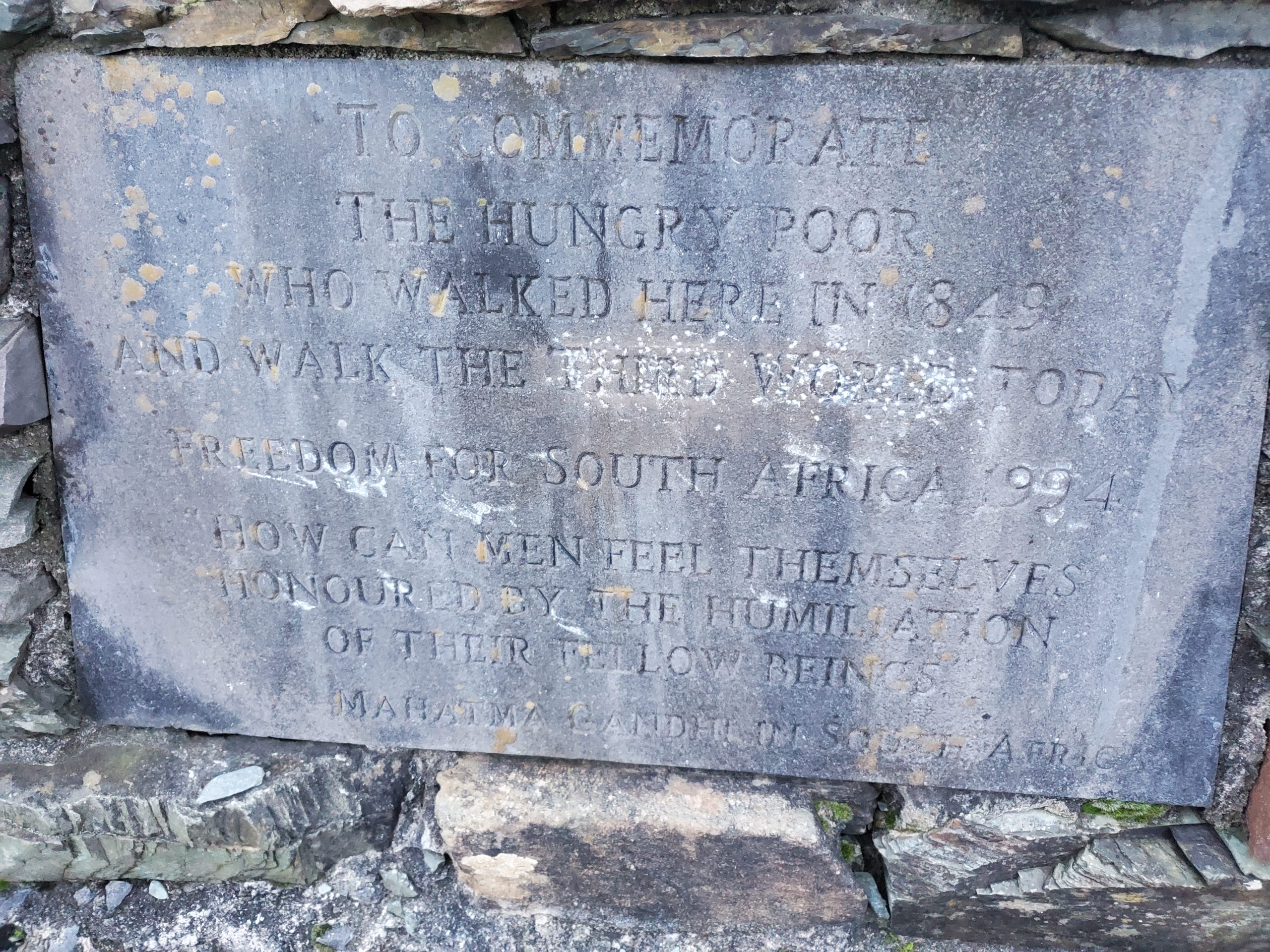
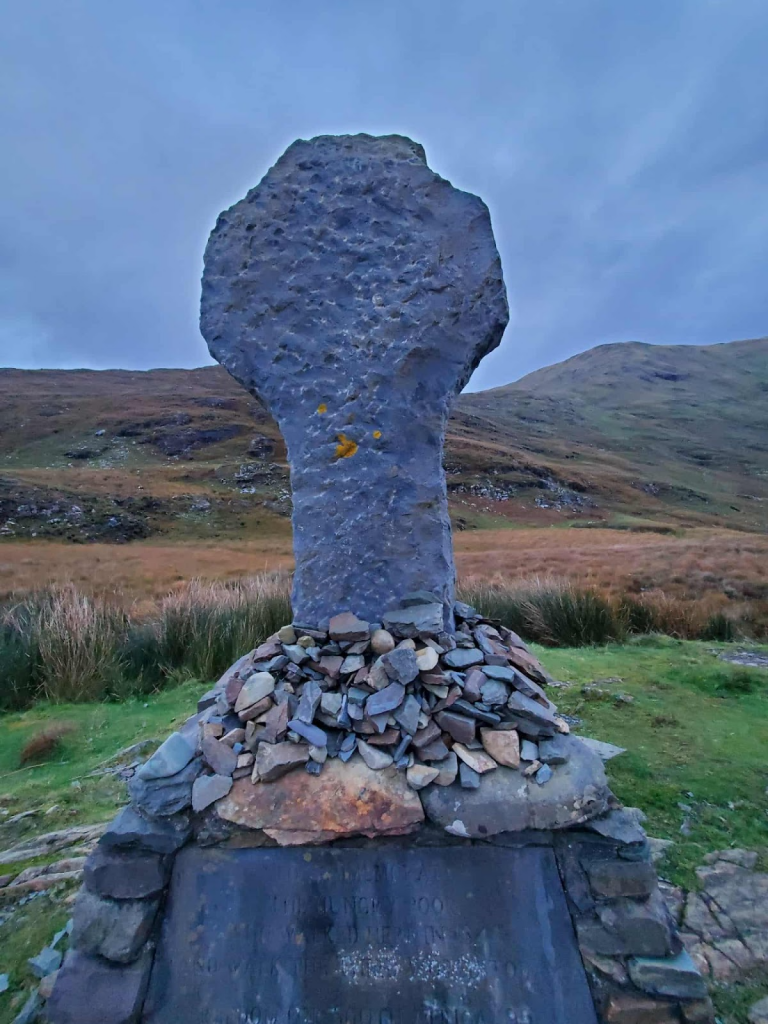
Doolough in English is Black Lake – a fitting name. The history of the valley is very sad and stays with you long after you leave. During the famine, on 30 March 1849, 600 starving residents of Louisburgh were forced to walk through the long valley hoping to receive social welfare, which may have kept them alive. It was a 19km walk, on what was barely a track, in freezing weather. Many died on the way, and those that made it, were turned away, with no aid provided. 400 people died in all. The tragedy is remembered with a memorial stone.
Following the famine walk, blogging about our evening out in Westport feels wrong, so it will have to wait until next time.