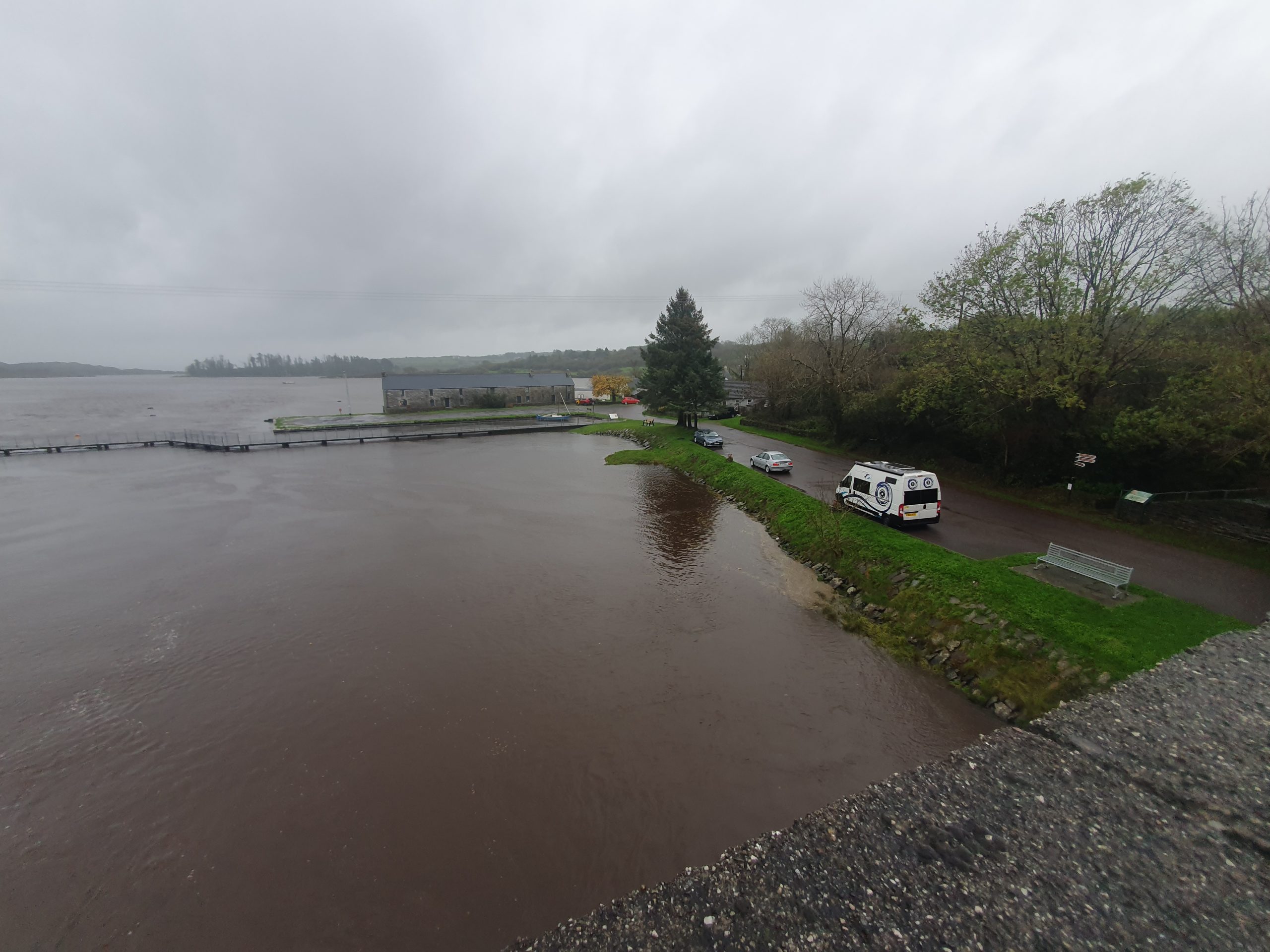
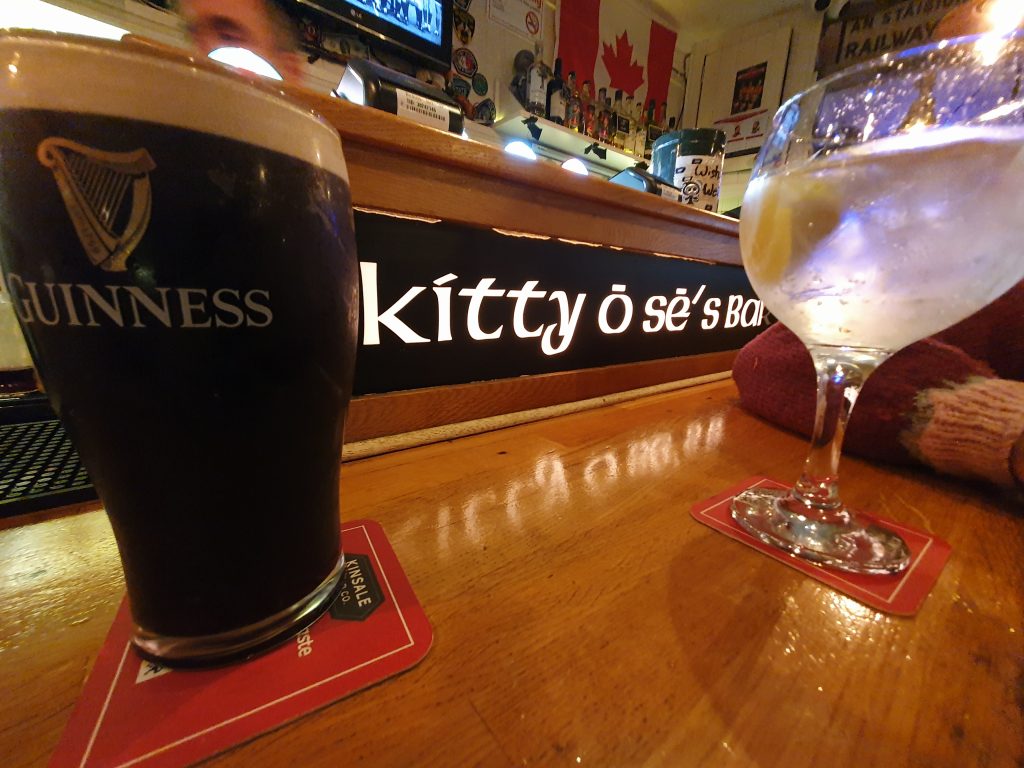
We started the Wild Atlantic Way on 15 October 2023 in Kinsale, parked by a quayside, and watching Ireland v New Zealand with a pint of Irish cider. Sadly Ireland lost, but other than that, it was a great start. Lovely pubs, lovely walks, and the sea. The music was disappointing – we went to a pub promising Irish music, and got American covers – not what we were hoping for!

Next stop was Old Head, Kinsale and it was very beautiful, if very windy. We visited the Lusitania and Old Head Signal Tower Museum. Great view, but a very sad story. On 7th May 1915 a German U boat sank the ship. It went down in 18 minutes, and 1193 lives were lost.

We left and drove along some very narrow, exposed roads. We quickly discovered that, while I love the driving, Neil isn’t so keen. He is great driving long distances, but is unhappy when the roads narrow, sometimes to little more than farm tracks, and when the ground to our left drops away to the sea. We drove through Timoleague, stopping to visit the ruins of the abbey, which were impressively huge.


From here we visited Skibbereen, and started to learn about the famine, a subject which would follow us around Ireland. The Skibbereen Famine Museum was really informative. The stories were harrowing, but the historic detail was a good introduction to a subject we would learn a lot about.
“The Skibbereen Union area lost over a third of its people during the Great Famine, one of the biggest losses of any union in the country.
Horrific reports from the Skibbereen area featured in the media of the time as it became infamous for the suffering endured by its people. Skibbereen quickly became a byword for famine and is still synonymous world-wide with the Great Hunger today.
As early as 28 October 1845, Dr Dan Donovan, the famous Famine doctor, reported that “one third of the entire crop was lost” and the area very quickly descended into chaos as society broke down. The effects of the Famine also lingered on in Skibbereen long after conditions improved in other parts of the country.
Skibbereen is the most important and significant town in Ireland in terms of its Famine heritage and many of the sites in the town have direct links with this tragic time.”
Great Irish Famine Exhibition – Skibbereen Heritage Centre
Above is short extract from the museum homepage. I am not going to go into detail, as many, far better and more informed writers have done so already. We left the museum and wandered around the town, but felt very subdued. And also very wet, as Storm Babbet had hit – the first of a few storms – it’s not called The Wild Atlantic Way for nothing.
It felt right to visit one of the Famine graveyards after Skibbereen, and pay our respects. The vibrant green of the graveyard seemed at odds with its sober purpose, but it was lovely to see it so well maintained. It’s just a shame more wasn’t done to protect the people when they were living.


From here I convinced Neil to drive to Lough Hyne. It was probably the first time he said, “I told you the road didn’t look suitable.” It was not the last time, and I still ignore him. The unsuitable roads are the most fun. This road was very high up, as wide as the van, and with no verges. We met a post office van, squeezed past each other and had a quick chat. The postman was a Stoke supporter from Biddulph, which made Neil (also a Stoke supporter) more inclined to take his advice, and we headed down to the Lough Pier.

The rain absolutely soaked us in minutes, even with coats on, as the wind blew it into us. It was desolate, but a lovely place to sit and have some lunch. Deciding it was far too windy to stay the night, we headed off and nearly had no choice but to stay the night. The sharp incline out of the car park, and the wet leaves, with the torrential rain, nearly beat the van’s ability to keep traction and get up the hill.

We made it through, and headed back to Skibbereen, trying to find a park up. We thought our only choice was the roadside in the town, but a lovely lady in a craft shop suggested we went to Ballydehob. This turned out to be a great suggestion.

Despite the rain, we parked up and went for a walk to find our bearings (read: a pub). Met a lovely English man, out with his dog, who had been living in his van in the village for 7 years. He invited us to the back room of a local pub, to help with the village Halloween decorations. I am not a fan of Halloween, but it sounded like fun, so we went, and spent a few hours making paper mâché monster heads. Neil chatted with the locals; I was concentrating on my heads. Having done all we could to help, we headed to the pub opposite, as the first one wasn’t actually open – the lady behind the bar came from Alton. Small world!


We were invited back for the Halloween parade but had moved on too far by then.
We had a lovely park up in Ballydehob, next to the harbour, near an old brick bridge. It was peaceful and quiet, but a bit nerve wracking, when someone in the pub told us the road floods. It had not stopped raining all day. Neil kept an eye on the van’s CCTV and luckily, at no point, did it appear to be floating, rather than parked.

However, when we returned to the van, we discovered the skylight leaked. Neil’s side of the bed was wet. He had to sleep on a blanket, over the damp mattress, with another blanket over us. I managed to sleep, but Neil didn’t, so we woke up tired and grumpy, but to beautiful views.

Leave a Reply